


Blog
17 Years Perfecting Callaway's Product Visualization
Golf clubs present one of the toughest challenges in product visualization: organic, aerodynamic geometry wrapped in chrome, carbon fiber, and intricate patterns. For 17 years, Rodrigo Albarran has been solving this puzzle at Callaway Golf, building a 3D workflow that delivers hundreds of photorealistic renders on tight deadlines. His secret? Mastering the light that wraps around those complex curves.
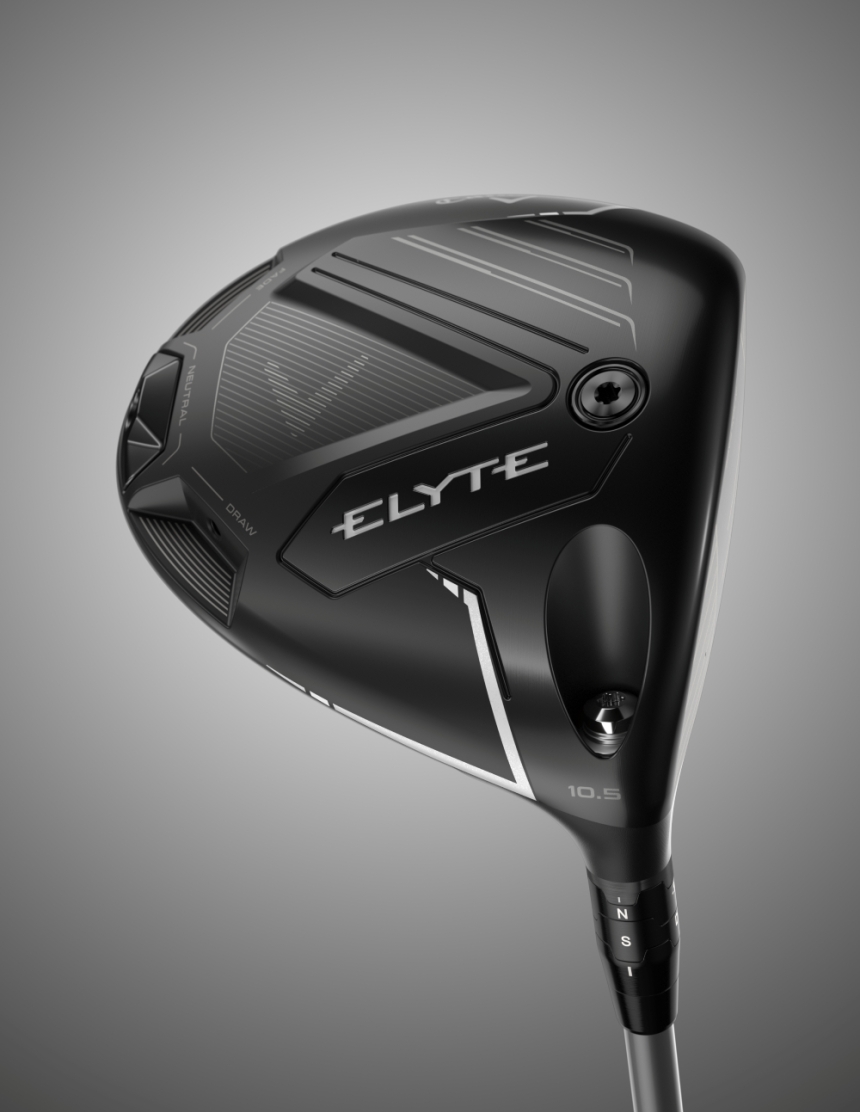
Elyte Night Edition Driver
The Challenge: Marketing Before the Product Exists
The main challenge was the 'gap' between marketing deadlines and physical product availability. We needed to create high-end imagery before samples were even produced. What started as a one-man team creating still images quickly exploded into 3D animations, TV commercials, and social media content. To handle that exponential growth, we built a formal 3D production pipeline and a dedicated team of three to manage asset requests from our departments globally.
One of the immediate problems we faced was the need for constant photography re-shoots and extensive retouching. The time and budget previously spent on 'fixing it in post' for photography was massive. Beyond that, the ability to produce high-end renders before physical samples were even produced became a game-changer. It allowed us to have final images ready for web launches and printed materials before the final product was out of production, something the company hadn't seen before. Needless to say, this made a lot of people very happy.
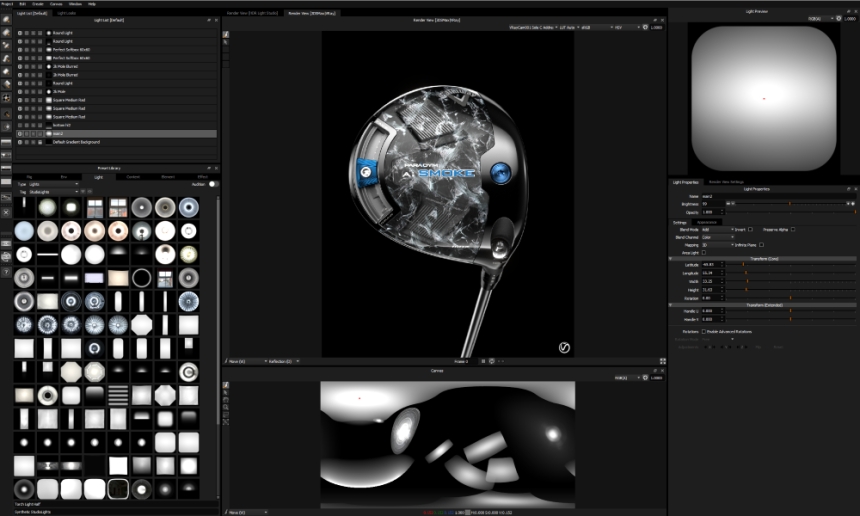
Lighting Design in HDR Light Studio
Why Golf Clubs Are So Difficult to Light
The different finishes aren't really the biggest problem. The real challenge is the organic geometry of the club head itself.
Golf clubs are full of subtle, compound curves and aerodynamic shapes that transition into one another. When you're dealing with a highly reflective surface on a shape that organic, a light source that looks great on the 'toe' might completely ruin the 'heel' or create an ugly reflection on the crown. It's a constant balancing act.
As many in the industry know, translating CAD data into a usable 3D object can be a headache. The geometry often comes in with artifacts or less-than-ideal tessellation. I used to do a lot of quad modeling to avoid using any of the CAD, I really enjoy modeling, and I'm quite fast at it. Unfortunately, the demand grew so much that there was no time to create my own models, and I had to become proficient in Rhino3D to edit CAD for models that were needed right away. However, one thing I've learned over the years is that great lighting can often mask the imperfections of a difficult model.
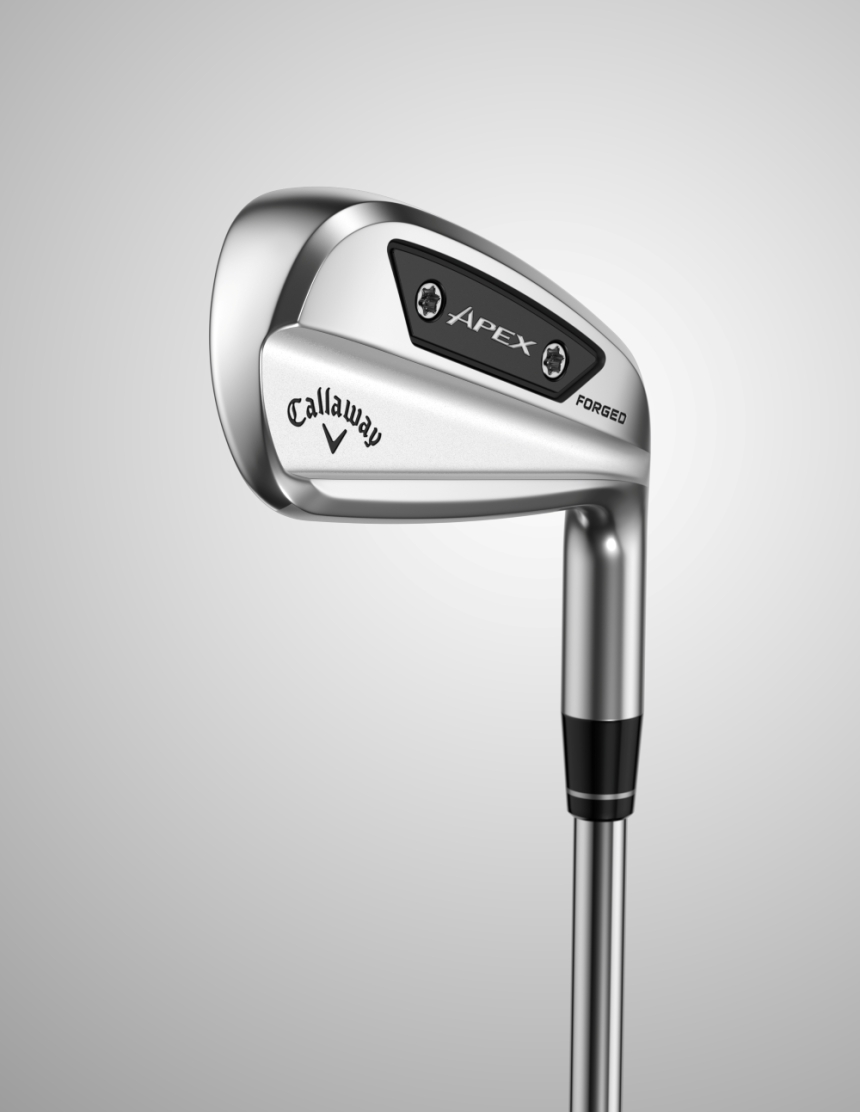
Apex Ai200 Iron
Solving Complex Lighting with LightPaint
This is exactly where LightPaint becomes my best friend. Instead of moving lights around in the 3D viewport and guessing where the reflection will land, I can just click on the specific part of the club face or the sole where I want a highlight. It allows me to 'sculpt' the light around those organic shapes in real-time.
"Instead of moving lights around in the 3D viewport and guessing where the reflection will land, I can just click on the specific part of the club face or the sole where I want a highlight."
HDR Light Studio handles the process of wrapping lights around those complex curves, so I can focus on making the club look fast, premium, and sleek. It turns a frustrating game of trial-and-error into a very intuitive, creative process.
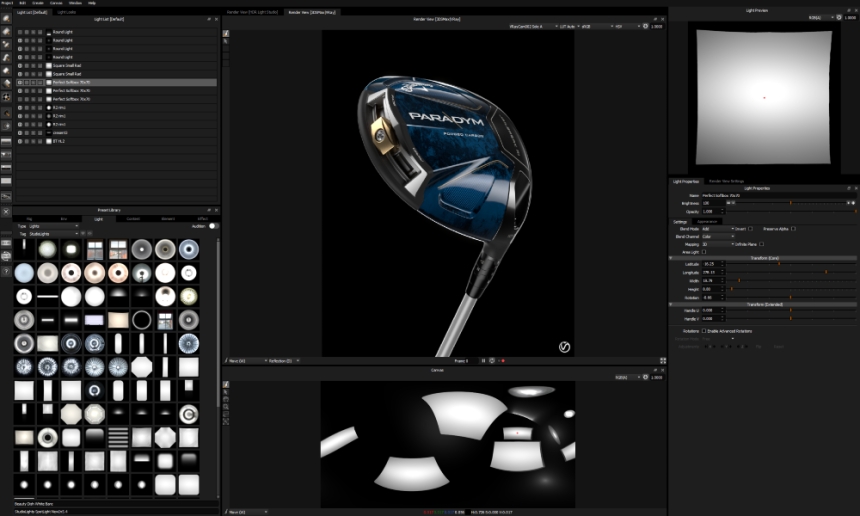
Lighting Design in HDR Light Studio
The Daily Workflow: From CAD to Marketing-Ready Renders
Because our volume of requests is so high, having a tool like HDR Light Studio to standardize our workflow is essential. We've built a library of custom lighting environments tailored to the specific geometry of each club category, drivers, irons, fairway woods, which allows us to maintain a consistent 'signature look' across the entire brand.
HDR Light Studio is the backbone of this process. It allows us to turn out hundreds of high-end images on incredibly tight deadlines. Without the ability to quickly iterate and refine reflections in real-time, we wouldn't be able to meet the global demand for our content.
"The time and budget previously spent on 'fixing it in post' for photography virtually disappeared."
I've been using HDR Light Studio since the beginning of my freelance career, so when I officially joined the marketing team, I drafted a list of tools that were indispensable for the job. HDR Light Studio was at the top of that list. I was fortunate to have leadership that trusted my judgment and invested in the tools necessary to elevate our output.
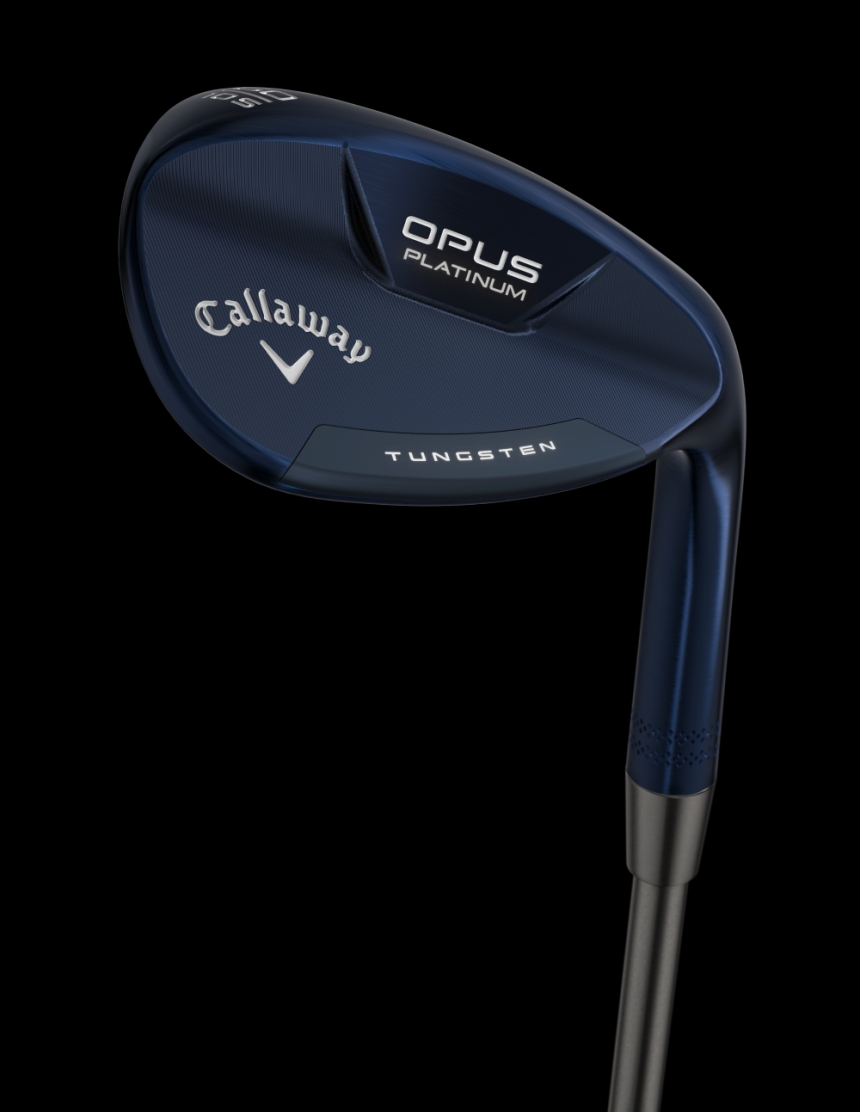
Opus Platinum Blue Wedge
17 Years of Evolution
3ds Max is my main tool. We shifted to V-Ray when V-Ray NEXT was released and haven't looked back. As we started producing more animation content, I had to learn skills to produce full product videos with particle effects, smoke sims, and refined cinematic camera motion. We've also extended our process from rendering clubs exclusively to golf balls, packaging, golf bags, and occasional experiments with apparel.
I remember attending a V-Ray conference in Bulgaria, where I met Mark Segasby. Everyone was talking about the future of GPU rendering. I came back and immediately requested a dual-GPU build, which completely transformed our animation output. Another game-changer has been tyFlow. I struggled for years with the old PFlow system, but now I couldn't imagine a day without tyFlow.
HDR Light Studio has also come a long way. I remember the Version 1.0 days of exporting OBJs, loading them in, and hoping the exported maps worked. Today, with the 3ds Max connection, seeing reflections update in the V-Ray IPR in real-time, it turns lighting into an intuitive, artistic process. We're so used to this now that we certainly take for granted how easy this is compared to 17 years ago.
"It takes a long time to develop the 'eye' for what makes a product come to life. HDR Light Studio takes away the tedious technical hurdles and allows you to focus entirely on the art."
The reality is that lighting is hard. It can be as difficult as running smoke simulations all day. It takes a long time to develop the 'eye' for what makes a product come to life. HDR Light Studio takes away the tedious technical hurdles and allows you to focus entirely on the art.

Opus Platinum Chrome Wedge
Looking Ahead
What's ahead for us is a shift from being a 'marketing resource' to becoming an essential part of the industrial design process. Every year, our pipeline gets faster, which has allowed us to start creating assets way ahead of schedule. We're now visualizing every iteration of R&D programs, which is a massive win for internal meetings and production decisions. I see a future where we're as closely tied to the engineers as we are to the marketing directors. We're also expanding beyond clubs into golf bags and accessories. I see Unreal Engine 5 in our future for imagery set in realistic golf course environments.
On a personal level, what excites me most is seeing my team grow. I have two artists who I see as essential long-term partners. They come from different areas of expertise but they're becoming strong generalists. The funny thing is that lighting remains the biggest hurdle for them, as it has been for every assistant I've ever mentored. Lighting isn't just a technical step; it's an 'eye' you must develop over years.
That leads me to the AI conversation. There's a lot of hype, and while AI is a great tool for quick sketching or concepting, it currently lacks the surgical control required for final production assets. To me, if I can have full control in 3D, why waste time fighting an algorithm? My fear is that the world might adapt to 'AI slop' faster than the technology can actually improve, and then that will set the standard and trends to follow. It already has to some degree.
How Rodrigo Got Here: From Musician to 3D Artist
I can't say that my incursion into 3D art had anything to do with wanting a career in the industry. I was maybe 19 when I was experimenting with Carrara 3D and Bryce 5, it is possible younger artists have never even heard of these, and my goal at the time was to create animations for my music. A similar visual style as Tool videos. Obviously, my music career never took off, so I had to settle for a career in 3D rendering and animation.
While trying to make ends meet, I found a few gigs online creating photorealistic images of CAD data to get marketing materials printed before a final sample of the product even existed. Eventually, an obscure and unknown company, unknown to a 21-year-old metalhead, contacted me to do some renders for them. I still remember my first meeting with the Callaway Golf creative director. I showed up late, wearing sandals, camo shorts, and a Slayer T-shirt. Not exactly the corporate look they were expecting.
By 2014, the 'glamorous' life of a musician became unsustainable, and I began looking at 3D modeling jobs in the gaming industry. Right around the same time I got a call from Callaway's new art director. He essentially brought me in to explain why I had been on payroll for so long. Apparently, no one knew my level of involvement in 3D asset production. The company saw value in bringing the work entirely in-house.
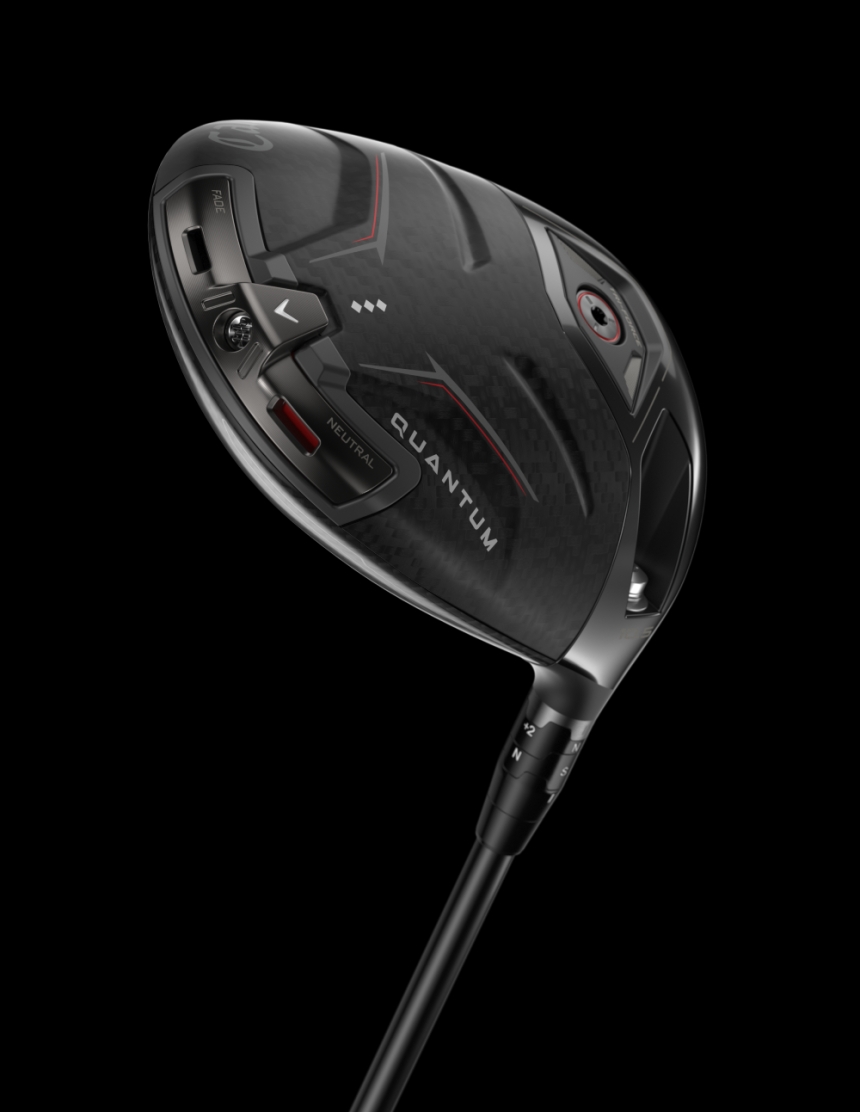
Quantum Triple Diamond Driver
For product visualization teams facing tight deadlines and complex reflective surfaces, Rodrigo's story demonstrates how HDR Light Studio transforms workflows at scale. When you're producing hundreds of renders across multiple product categories, each with unique geometry and materials, having a standardized lighting system isn't just helpful, it's essential. HDR Light Studio's LightPaint feature removes the guesswork from lighting organic shapes, while real-time feedback keeps creative momentum flowing even under pressure. The result? Consistent brand quality, eliminated photography costs, and the ability to launch products before physical samples even exist.
We'd like to thank Rodrigo Albarran for sharing his 17-year journey at Callaway Golf and demonstrating how lighting precision drives business value. To see more of his personal work, visit his Behance profile - for more of Callaway's stunning product imagery, visit callawayGolf.com.

This entry was posted in Customer Stories and tagged 3D Software: 3ds Max, 3D Software: Rhino 3D, Renderer: V-Ray.