

Blog
Lighting With Purpose - Marius Wilkens-Zimmermann
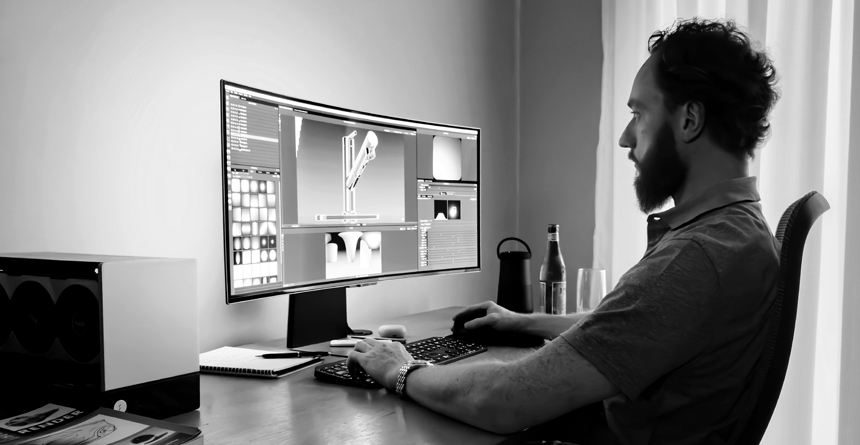
Marius Wilkens-Zimmermann has built his career around a simple idea: great lighting makes products feel real.
When we last spoke with Marius Wilkens-Zimmermann in March 2021, he was in the early stages of moving his CGI studio to the US. Five years later, the business - and the way he works - has evolved considerably.
Today, Marius splits his time between the US, Europe and South America, running a fully remote CGI studio that works with premium global brands. The move has given him something that once seemed difficult to reconcile with running a successful creative business: the freedom to choose where he lives and how he works.
But Marius was experimenting with this way of working long before remote working became the norm. When he first started living and working internationally, with a home base in South America, he worried that companies might not take him seriously. In reality, it quickly became a non-issue. Clients were happy to ship prototypes to wherever he was working, and the quality of the work remained what mattered.
Today, that freedom is an important part of his lifestyle. Working between the US, Europe and South America has given him a unique perspective on how the cost of living and doing business can vary from one country to another, particularly compared with his native Germany.
He credits much of the shift towards this kind of working to the normalisation of remote work.
"Business is who you know, and whether people like you. What matters to me is creating work that feels meaningful to me and delivers real value to my clients."
That philosophy runs through the way Marius approaches both his business and his creative work. An agent handles contracts and negotiations, allowing Marius to concentrate on producing, advising, pitching ideas and, perhaps most importantly, building long-term relationships with clients. For him, the render is only part of the job, understanding the people behind the project and becoming a reliable creative partner are just as important.
Lighting Before Materials
For Marius, lighting isn't something added at the end of a project. It's where the visual idea begins.
A recent project gave him the opportunity to explore that approach further. Without the constraints of a "typical" client brief, he could experiment with colourful, evocative lighting setups and test them against simple grey 3D materials before introducing textures and materials. The exercise was deliberately stripped back: if the lighting worked without relying on complex materials, the form of the product had to be doing the work.
"Every curved edge has its own gradient. If the light is right, the material almost doesn't matter yet."
It's an approach that puts lighting at the heart of the creative process. Rather than using light simply to make an object visible, Marius uses it to reveal its form, establish mood and influence how the viewer feels about the product.
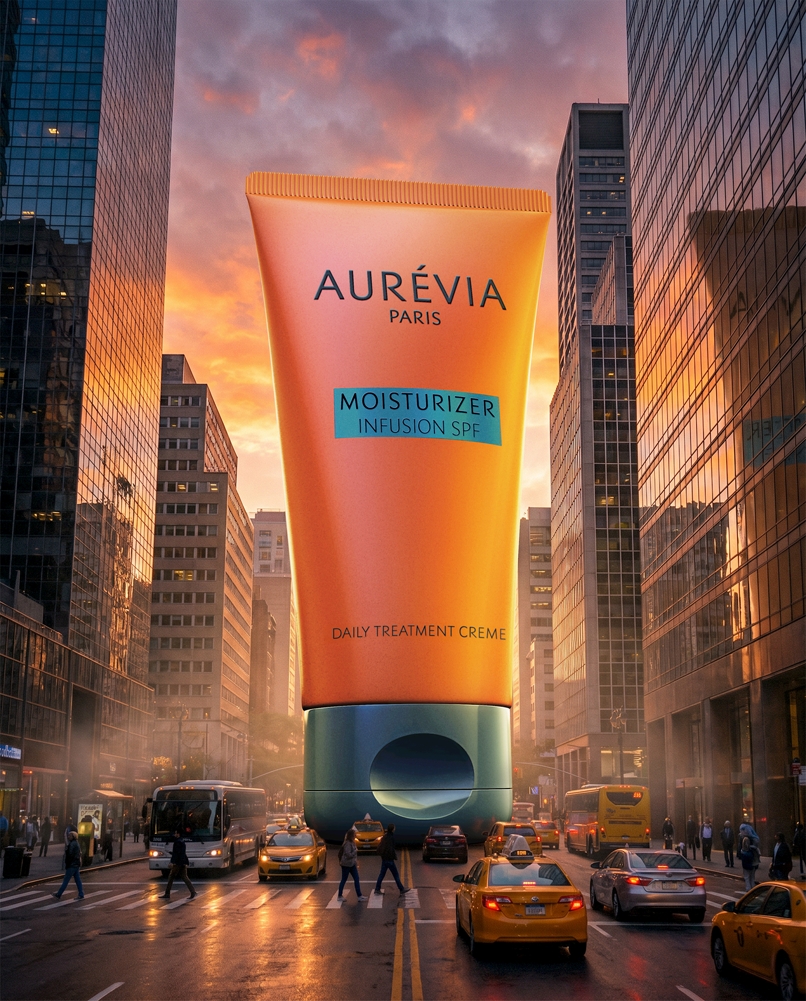
CGI AI City
Where HDR Light Studio Became Indispensible
Marius has been using HDR Light Studio for years, but it's the early exploration stage of a project where he sees its greatest value.
This is the point where an idea needs to move quickly from a client's head into something visual - something everyone can look at, discuss and respond to.
"The fast exploration phase for that first-look stage is where it earns its place. I can copy and paste my HDR environment files into a new project and keep the consistency I need - instead of an endless cycle of adjusting light and material."
That ability to explore quickly is important, but so is the ability to repeat what works. Carrying lighting setups from one project to the next means Marius isn't starting from scratch every time he works on a similar product - lighting becomes a repeatable system, with enough flexibility to adapt to each new product and brief.
For a studio working across multiple projects and global brands, that consistency saves more than time. It creates a recognisable level of quality.
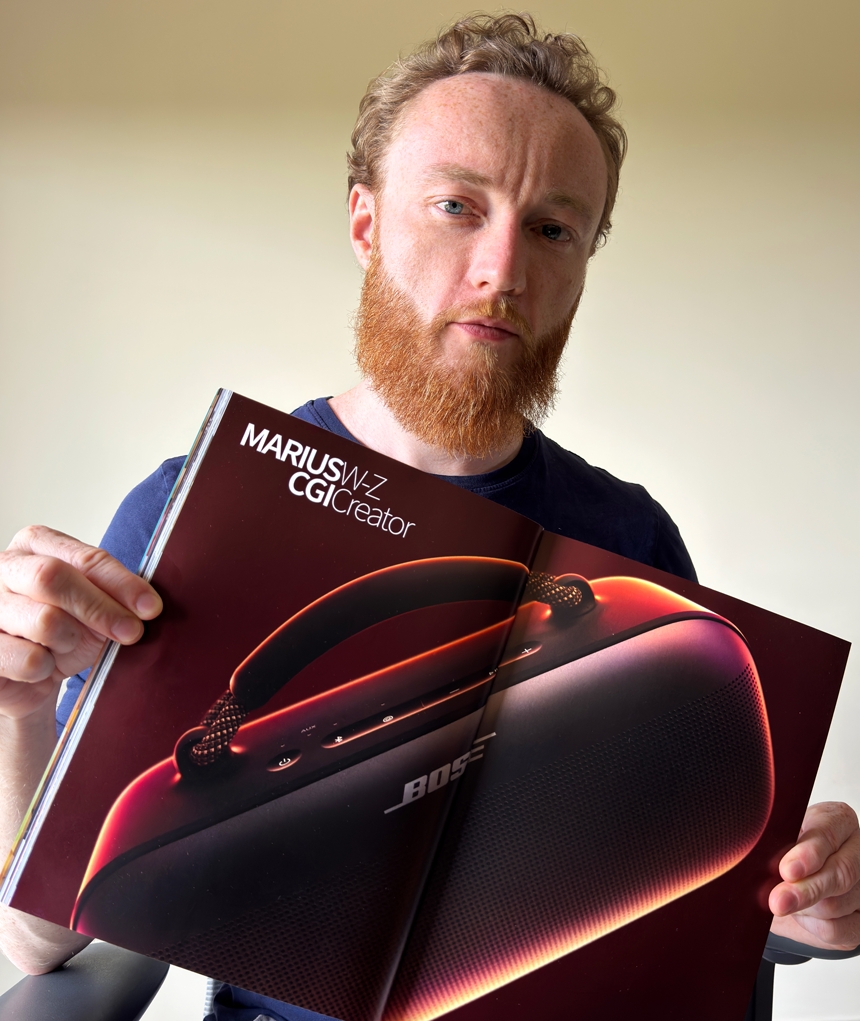
Marius Wilkens-Zimmermann
Case in Point: The Audio Project
A project for a globally recognised audio brand is a good example of how Marius approaches product lighting.
The aim wasn't simply to produce a technically accurate render. The product needed to feel tangible - something the viewer could almost reach out and touch.
"Good lighting makes a product feel alive. You want the viewer to want to go in and touch something."
Marius's ongoing work with the brand grew out of his existing agent relationship, but winning the work was only the beginning. The most important step was pitching the client with samples curated to their own mood board - a targeted approach that helped convince the brand to keep bringing him on board. Rather than simply executing the client's specification, he pitched his own interpretation of the brief, developing a visual direction that reflected the brand.
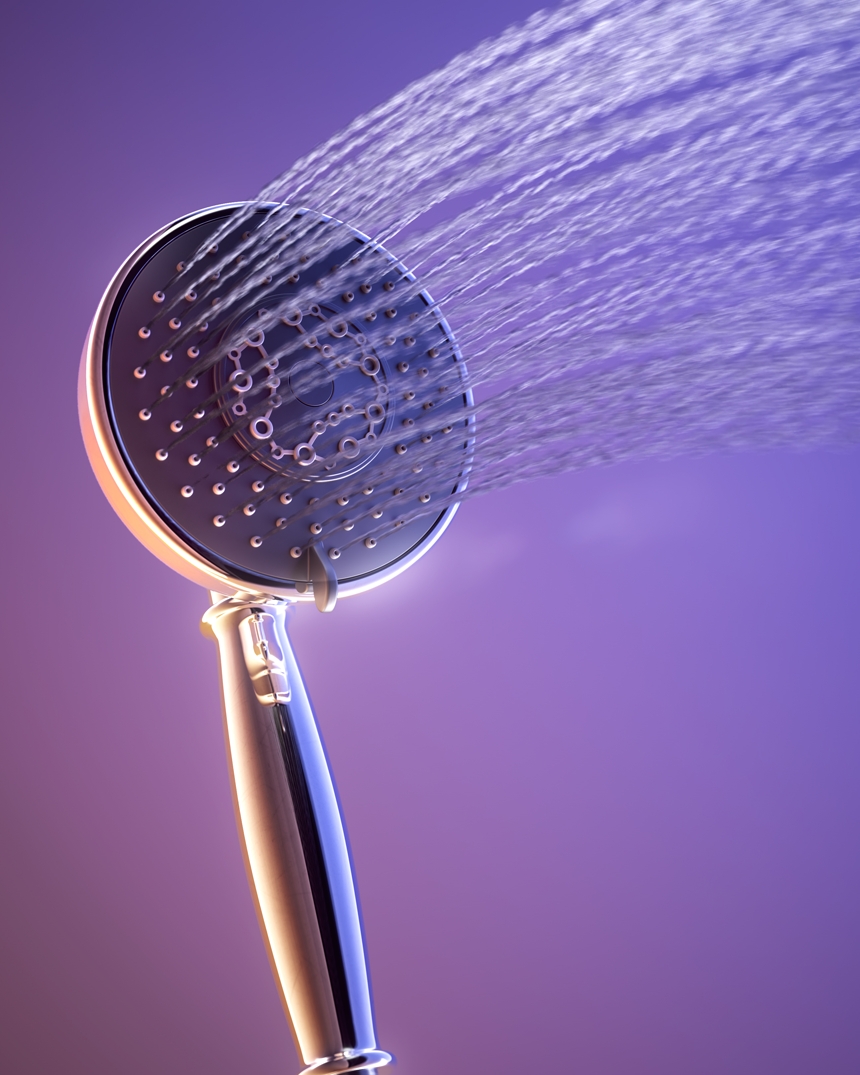
Kohler Shower Head
Lighting consistency matters just as much for work created for motion - reflections need to behave predictably across an animation, while still creating enough variation and interest to make a product feel dynamic. This was especially true for glossy, curved surfaces like speaker housings and headphone finishes, where reflections do a lot of the work in communicating material quality.
HDR Light Studio gave Marius the control to shape those reflections precisely and, just as importantly, reproduce them consistently.
That meant less time spent correcting lighting problems in post-production and more time refining the creative result.
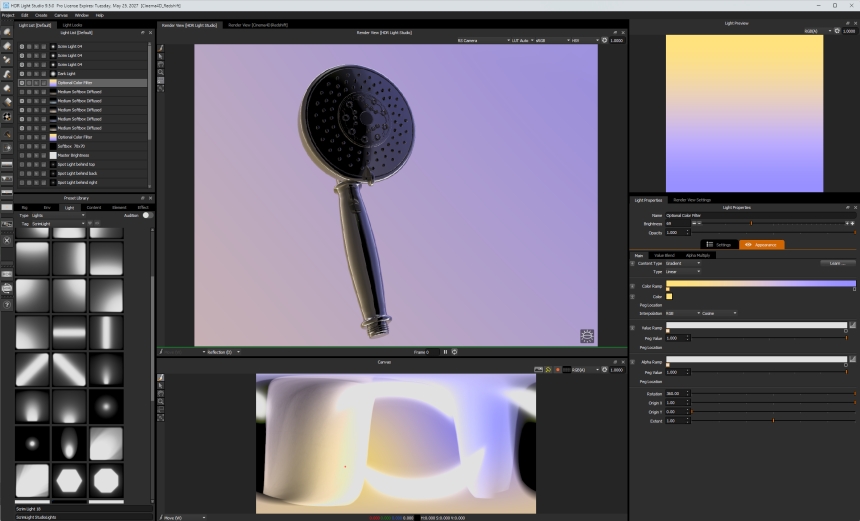
Lighting Design in HDR Light Studio
Making Light Do the Work
Marius describes the value of HDR Light Studio in fairly simple terms: speed, precision and creative freedom.
"I light by looking at the product and shaping the light where it matters. Integration is fast - it behaves like a photo studio, not a render queue."
That comparison is important. Marius isn't interested in lighting for the sake of technical complexity. He wants to work with light in the same way a photographer might - looking at the object, deciding what needs to be revealed and then shaping the light accordingly.
"Materials are defined by what they reflect. Every light has a purpose - nothing is there just to fill the frame."
For products with complex surfaces and carefully controlled finishes, that level of precision can make a significant difference. Instead of relying on post-production to repair reflections or create the final look, Marius can make those decisions while he's lighting the product.
The result is a workflow where lighting is part of the creative decision-making from the start, rather than something to fix later.
From a Teenage Helicopter to a Global Studio
Marius's approach to problem-solving goes back to his earliest experiments with 3D.
At 16, he created a helicopter render for his very first client that showed him what was possible with CGI. It was an early example of the self-taught approach that would eventually shape his career. At 18, he dropped out of school and spent the next two years working across different agencies - industrial design, architecture, and a 3D studio - building a broad technical foundation before striking out on his own.
It was during that time at 19, working for an industrial design company whose clients included luxury kitchen and bathroom manufacturers, that Marius first fell for the way light defines a product's materiality. Metallic, high-end fixtures gave him an early education in how reflections and highlights communicate quality - a fascination that never left him. By 20, he had started his own freelance business, relying on technical ability, curiosity and visual judgement rather than a traditional education.
For Marius, that path never felt like a compromise. He never felt the need to follow the conventional route - art school, or a formal design education - to prove his ability. Instead, he built his career on hands-on experience and a willingness to learn by doing.
"Problem solving is technical skill plus visual taste. One executes the idea, the other makes it a compelling image. Professionalism is what makes that consistent, project after project."
The fundamental challenge hasn't really changed since that first helicopter. What has changed is the scale. The problems are more complex, the expectations are higher, and there are more people involved in deciding what the finished image needs to achieve.
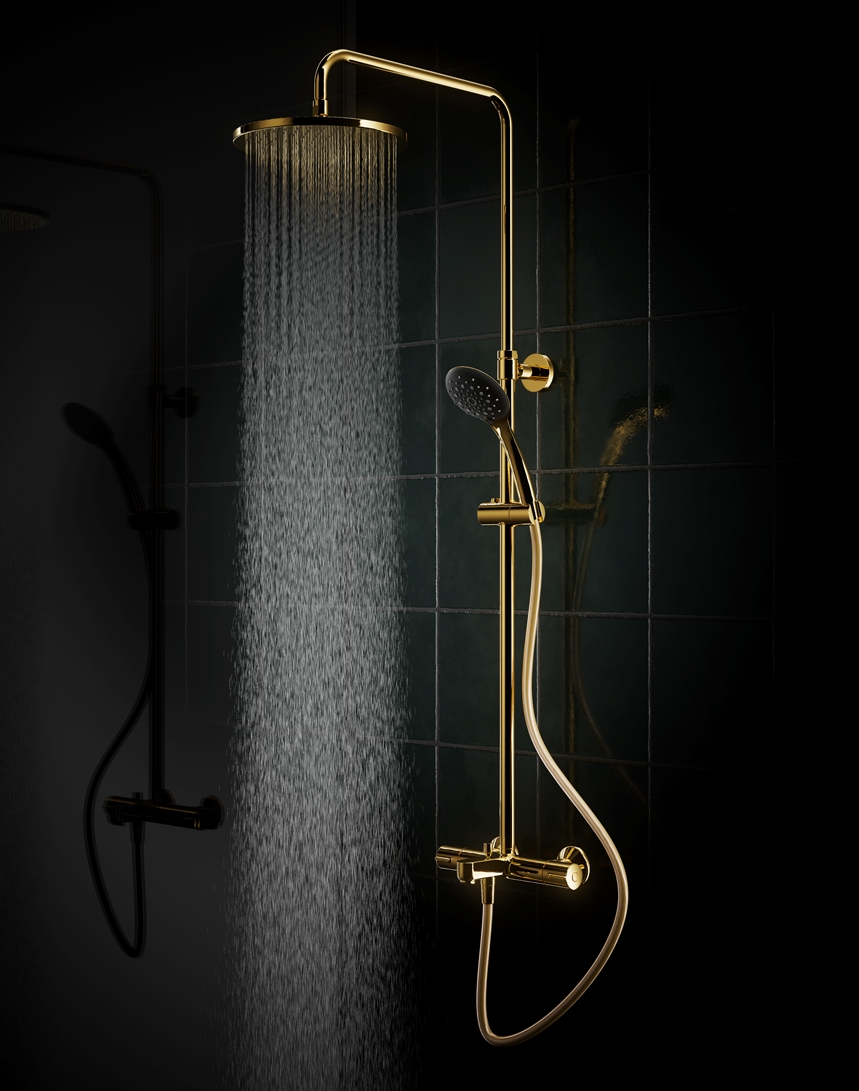
Kohler Shower
When Every Detail Matters
Working with premium global brands has pushed Marius's own expectations higher.
The challenge today isn't necessarily producing a technically impressive render. It's satisfying the different perspectives involved in getting a project over the line - from engineers and designers to creatives, marketing teams and other stakeholders.
One recent experience, working alongside the internal creative team of a prominent global client, has had a particularly positive impact on his work. Being part of a strong creative team stretched his abilities and challenged his thinking, ultimately improving the work.
"Details matter across engineers, creatives, and stakeholders. I changed how I approach feedback - reviews became a collaborative process of refinement, not a checklist to get through."
It's a significant change in mindset. Rather than seeing feedback as a list of corrections, Marius sees the review process as part of the creative development. The goal isn't simply to get an image approved; it's to use the different perspectives around the project to make the work better. That collaborative approach has become an important part of how he works with clients today.
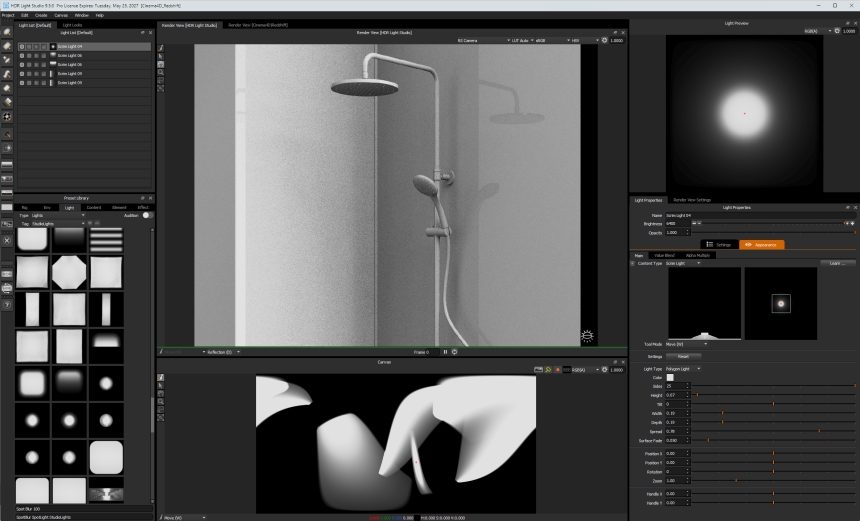
Lighting Design in HDR Light Studio
Is HDR Light Studio Worth It?
For Marius, the value of HDR Light Studio comes down to the problem it removes: the endless cycle of moving a light, checking the reflection, changing the material, moving the light again - and starting over. HDR Light Studio compresses that process into a much faster creative exploration.
"It allows for real-time lighting in client meetings," Marius says, "like being on set in a photo studio."
The ability to shape reflections precisely, experiment quickly and reuse lighting environments across projects means that the work becomes less about repeatedly solving the technical problem of how to light something and more about deciding what the light should say.
For Marius, that's where the investment makes sense.
It's not simply about producing the same image faster. It's about having the freedom to explore more ideas within the time available - while maintaining the consistency expected by global brands.
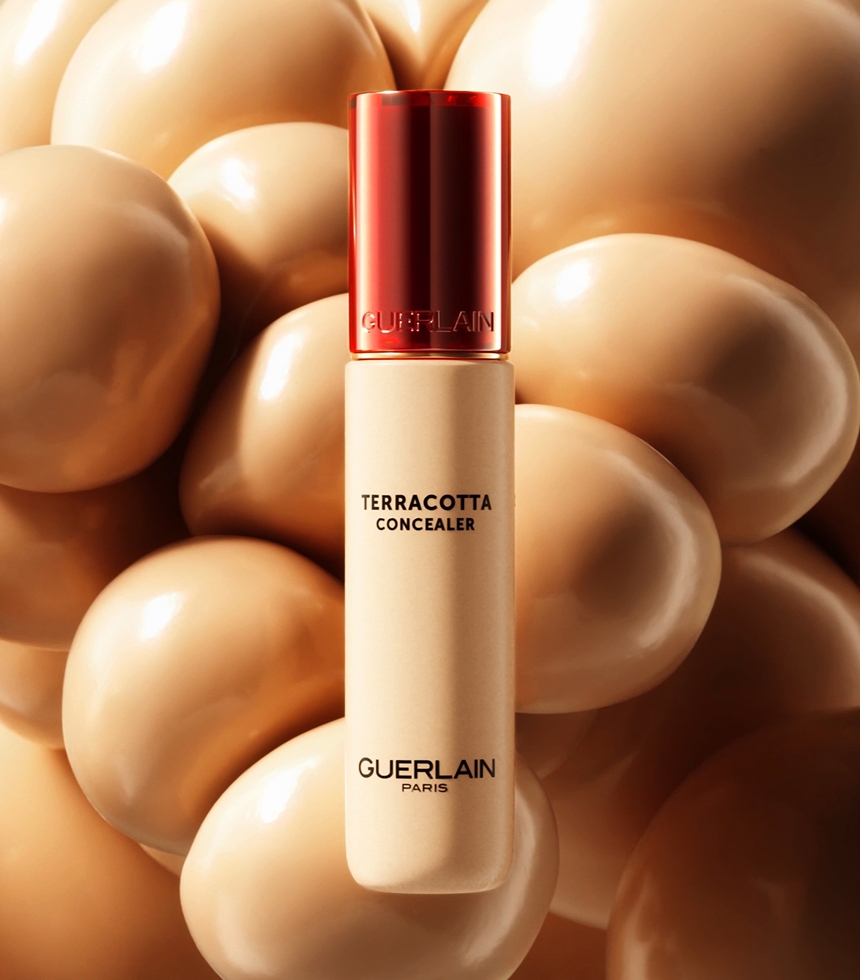
Looking Ahead
Marius is now looking beyond individual projects and thinking about the broader contribution he wants to make to the industry.
Part of that is through his work with clients: creating lighting that makes products feel tangible, premium and desirable, and helping brands communicate through imagery.
But he's also increasingly interested in sharing what he's learned.
He's rebuilding his Instagram presence with a younger audience in mind. His guiding idea: don't show your work, show how you work - offering insight into the process behind the finished images rather than just the polished result. It's a way of being more open about a part of his story he was once hesitant to share: years ago, before this version of his business existed, he was already living a version of the remote, internationally-based lifestyle now associated with "remote-worker" influencers.
For someone whose own career began by teaching himself what was possible, that feels like a natural next step.
"Inspiring young creatives to think bigger, and to not rely only on traditional education - that's part of what I want to be known for."
The journey from a teenager experimenting with a helicopter render to running a global CGI studio has taken Marius a long way. But the fundamental idea behind his work remains surprisingly consistent.
Solve the technical problems. Develop the visual eye. Build relationships you can trust.
And, above all, use light with purpose.
"In five years, I want to be known for mastering light - setting new standards through exceptional lighting, and transforming technical renders into emotional experiences."
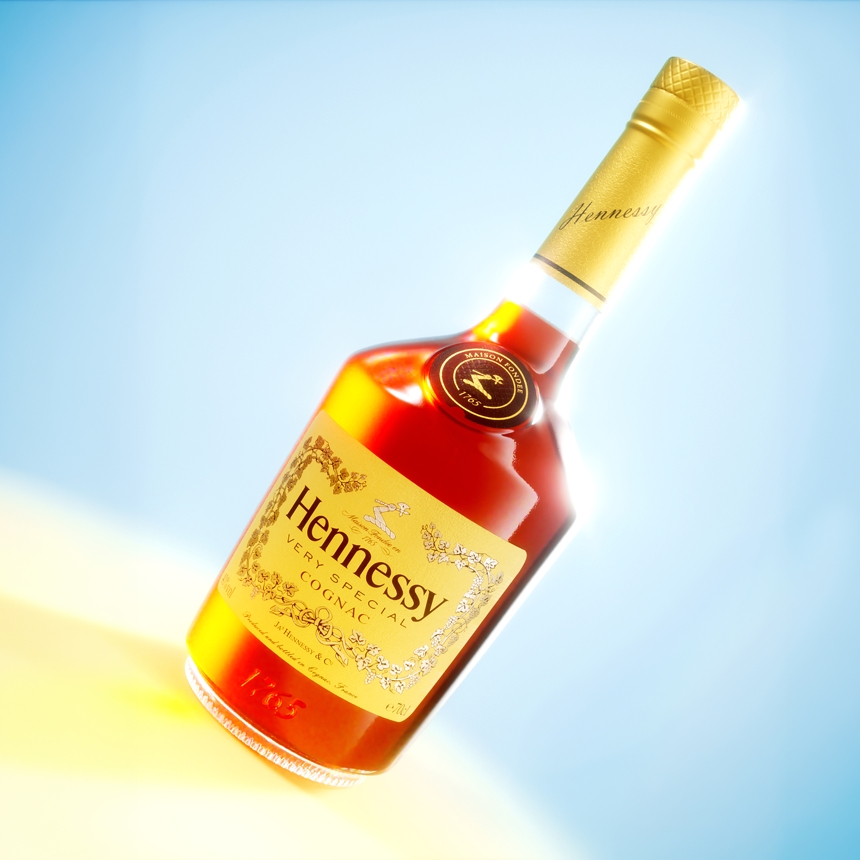
Hennessy
Targeting Luxury: Why Kohler
The Kohler images featured here weren't a commissioned brief - they're self-initiated samples, created with a specific goal: opening the door to more luxury kitchen and bathroom brands.
"I love the design aspect and how light shapes the products," Marius says. "They are so metallic, and I can really push the limits with HDR Light Studio and take full advantage of the software."
For Marius, the Kohler pieces are as much a statement of intent as a showcase of skill - proof of the material realism and lighting precision he wants premium brands to associate with his name.
Thank you Marius
We want to thank Marius for taking the time to speak with us again. He's been a valued HDR Light Studio customer for years, and it's been genuinely rewarding to see how his work - and his thinking about light - has developed since we last caught up with him in 2021.
You can see more of Marius's work at www.m-wz.com, and follow his process on Instagram at @mwz_cgi.creator.
This entry was posted in Customer Stories and tagged 3D Software: Cinema 4D.